Research Area: Scene/s
Research Area: Scene/s
Under the leadership of Erika Thomas, the ‘Scène/s’ research group within the MUSE Research Unit (Communication, Society, Environment) at the Faculty of Arts and Humanities brings together 15 researchers who study the stage both as a space of appearance, a framework structuring practices and discourses, and a setting for interactions that contribute to the shaping of the social world.
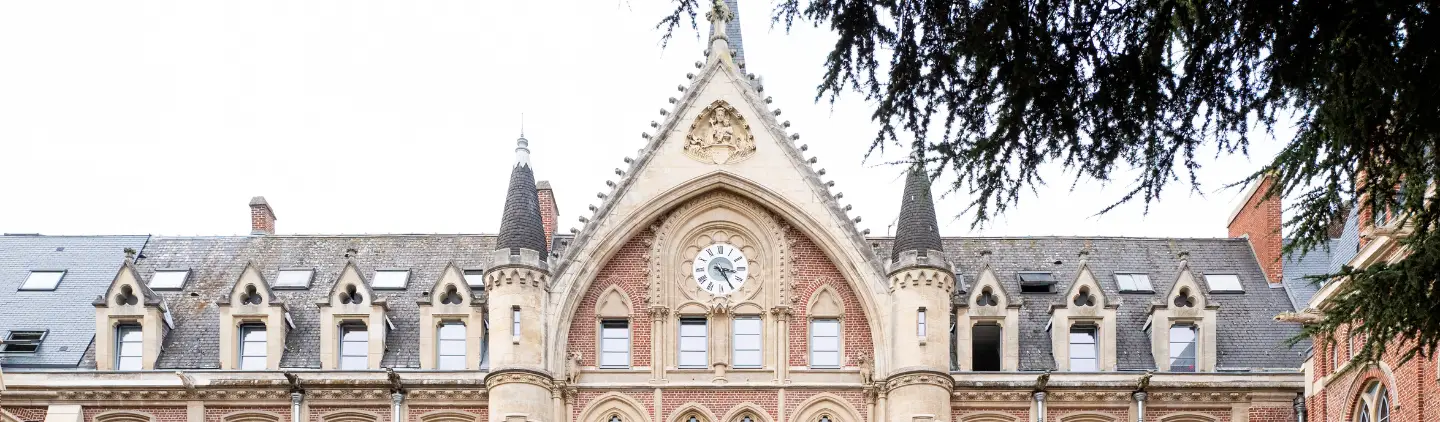
different aspects of the contemporary world
Exploring different aspects of the contemporary world
Derived from the Greek word skēnē, which originally referred to the tent or structure in which theatrical performances take place – including sets and wings – the term ‘stage’ denotes a space for performance, for bringing things into being and for visibility. The ‘scene’ is at once a space of appearance, a framework structuring practices and discourses, and a setting for interactions that help shape the social world. It is from this perspective that this research area aims to explore – through each of its sub-areas – different ‘scenes’ in the contemporary world. Artistic and cultural scenes are examined through the lens of creative practices, digital technologies and research-creation approaches; clinical scenes explore the role of the subject, desire and the contemporary forms of mediation involved therein; the narrative, literary, cinematic and civilisational spheres are examined through the study of narratives, expressions and cosmologies that shape social worlds; finally, the institutional and organisational spheres enable an analysis of the forms of power, discourses and mechanisms of influence in contemporary society.
‘Arts, Culture, Technology and Digital’ Research Group
‘Arts, Culture, Technology and Digital’ Research Group (Act’N)
Research group co-led by David Faltot and Zineb Majdouli
Members: David Faltot, Zineb Majdouli, Eléonore Lepeers (PhD, Educational Engineer, AUPEN).
This research group has two key objectives:
Firstly, it is open to researchers who approach art and culture as a subject of research. Aesthetics, socio-anthropology, semiotics, literary analysis and art history may thus be, amongst others, the research disciplines through which researchers observe and analyse artistic/cultural objects and/or artistic/cultural practices, particularly in relation to technology and the digital sphere. The aim is to reflect on these objects and the methodologies to be employed, particularly within the constantly evolving digital context.
Furthermore, it is open to researcher-artists, artist-researchers and artists engaged in a ‘research-creation’ approach, particularly those practising alternative forms of writing in the humanities and social sciences to question, highlight and, at times, reveal the specific nature of an approach and/or an object. The second objective of this cluster is, in fact, to stimulate a debate that challenges academic hierarchies and transcends disciplinary boundaries: (audio)visual arts, documentary photography, field recording, sound studies, exhibitions, technological arts and any combination of these elements. The aim is to draw upon and examine so-called multimodal methods in the humanities and social sciences.
Keywords
Artistic and cultural objects; Research-creation; Digital technologies; Digital culture; Multimodal methods
‘Narratives and Societies’ Research Group
‘Narratives and Societies’ Research Group
Research group co-led by Stéphanie Leroux and Florentina Rodrigo-Paredes
Members: Aliocha WaldLasowski; Anouska Zummo; Michel Feugain; Sean Mark
This research group seeks to contextualise narratives and the worlds from which they originate, which they evoke and which they produce. The narratives studied range from classical texts and discourses to the full spectrum of traces left on the Earth’s surface, right down to the human body. They also encompass all forms of movement (practices, behaviours, rituals, etc.) and both enduring and ephemeral creations, which together constitute signs enabling us to understand the fictional and real worlds in which humans live.
This approach is fundamental in that it touches upon philosophy – the search for meaning – which underpins all disciplines within the social sciences and humanities, such as anthropology, geography, history, linguistics and political science; the arts; and so on. It is therefore holistic because, beyond considering the elements that make up complex systems, it focuses on the links and dynamics that drive them and cause them to evolve, whilst putting the interplay of different scales into perspective.
The methodology is that of the social sciences and humanities, combining documentary research with fieldwork.
Key words
Narratives; Expressions; Worlds; Cosmologies, Societies; Cultures; Relationships with the World and with Others; Intercultural Issues; Movements; Perspectives; Places; Interlocking Scales; Humanities
‘Subject, Desire and Creation in Contemporary Art’ Research Group (S2DC)
‘Subject, Desire and Creation in Contemporary Art’ Research Group (S2DC)
Research group co-led by Julio Guillen and Carole Pinel
Member: Olivia Beauprez
This research group explores the place of the individual and the connections that underpin them in contemporary society. This question engages as much with our ways of thinking as with our professional, therapeutic, educational, transmission and artistic practices. The research is based on a clinical methodology that takes as its starting point the particularity and singularity of the encounter, offering an analysis and formalisation of various issues through narratives, testimonies and interdisciplinary cross-references: narrative, memory and traces; artistic expressions and productions; symptoms and suffering in the contemporary world; the construction of information; and other avenues to be defined according to ongoing projects. The subject is to be conceived here as the emergent effect arising from an act that finds its opportunity in the fissure, in the interstices that stand in contrast to any approach that purports to be globalising or holistic. The question arises for clinical psychopathology as to what kind of response to intimate suffering is possible today, particularly by considering the space-time of the clinical encounter as not limited to the ‘traditional’ session, but as opening up to a whole variety of practices giving rise to new ‘mediations’.
Key words
Subject; Art; Act; Invention; Creation; Connection; Desire; Contemporary.
‘Powers’ Research group
‘Powers’ Research group
Research group co-led by Martin Baloge and Lydie Lenne
This cluster brings together researchers working on organisations and their role in society, on practices of influence and, more generally, on the mechanisms through which institutions and their members exercise power and authority – not only political power. The central theme of POUVOIRS lies in the desire to better understand the ways in which power and authority are exercised, established and received within organisations, whether political, media-based, voluntary, business-related or otherwise. Topics may include discourse analysis, organisational communication, symbols or the sociology of actors. We understand power in a broad sense, borrowing from Michel Foucault, as a social relationship taking place within the institutions under study. Indeed, it seems to us that the strength of our research group lies in its interdisciplinary approach, which enables us to examine the practices of power and influence from multiple angles, whether these are inter-individual or inter-institutional.
Researchers within the ‘Powers’ research cluster can work beyond the French context, adopting historical, comparative or intercultural perspectives. The cluster also focuses on the impact of new technologies on the ways in which power is exercised, affecting both professionals (in politics, the media, lobbying and communications) and ordinary users.
Key words
Power; Authority; Organisations; Influence; Institutions; Discourse
collaborative projects
Multidisciplinary, cross-faculty and inter-university collaborative projects
Documentary films
Documentary films
- On the filmmaker Chris Marker by Laura Farrenq and Érika Thomas, with the support of the Cinémathèque Française.
A discussion combining literature and documentary on species conservation took place on 28 September, centred on the documentary *A l’ombre des éléphants* (Thomas 2022, 30 mins), in partnership with Lille 3000.
Mock trials filmed
Mock trials filmed in partnership with MUSE (Arts and Humanities Faculty) and C3RD (Faculty of Law)
- A series of five multidisciplinary lecture-debates on “The role of images in historical trials”, open to the general public (starting on 1 December 2022)
- International symposium “The trials of the Tutsi genocide in Rwanda”, a C3RD-FLSH partnership (Sylvie Humbert-Marie-Ève Saint-Georges), with the support of the National Archives, the Foundation of the Catholic University of Lille, the AFHJ, LiRCO (Limoges Centre for Archives, Documentation and Expertise), and the IRIBA Archives Centre (Rwanda), 8 March 2022.
- A series of exhibitions
- Temporary: “Filmed trials: a social issue”.
- Travelling exhibition: “Filming trials: a social issue. From Nuremberg to the Tutsi genocide in Rwanda”
Symposia / Conferences
Symposia / Conferences
- A symposium entitled ‘Visual Anthropologies: From Fieldwork to Plural Images’ took place on 28 and 29 September 2022 (Erika Thomas, FF, FLSH, and Nathalie Gauthard, University of Artois). The proceedings will be published in the journal “L’Ethnologie” in 2023/2024.
Seminars / Study days
Seminars / Study days
- The Intimate Coastline. 2023 study day, followed by the publication of an edited volume.
- Black Studies. A symposium on ‘Africa of the Voyages’ in 2023, in collaboration with Union College, New York (Cheikh N’Daye, Director of the Africana Studies programme).
- Series of lectures as part of the Music and Visual Arts seminar
H2 - titre seo
Development of an online serious game in partnership with Université Gustave Eiffel
This game is designed as a fun educational activity combining a knowledge-based ‘quiz’ with an introductory journey. It aims to simulate a career path which, punctuated by decision-making moments, presents the player with a series of ethical dilemmas. The scientific approach is based on identifying the benefits and limitations that may arise from the development, implementation and use of such a tool, whilst examining its contribution to pedagogical innovation in the field of competence-based learning.
Partnerships: the DICEN-IDF laboratory and educational engineers from the CIPEN at Gustave Eiffel University; the MUSE-FLSH laboratory and educational engineers from the SUN and the Medialab at the Catholic Institute of Lille.
For further information: Lucile Desmoulins, Gustave Eiffel University
Further reading

The Research Chair in Emerging Worlds
The UNESCO Research Chair in Cultural Diplomacy