
interdisciplinary approach
Academic Research at the Faculty: an interdisciplinary approach
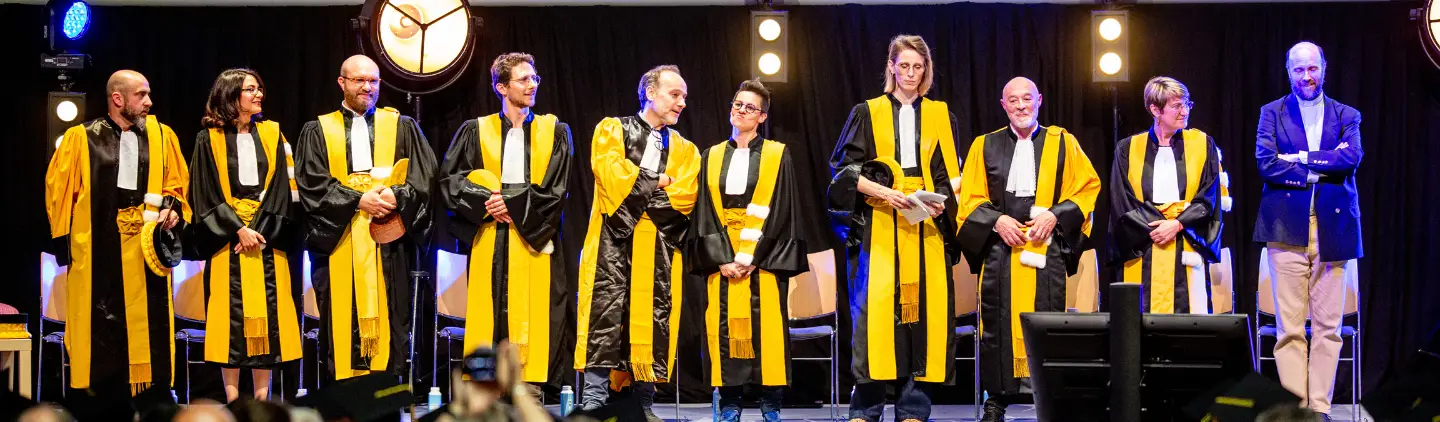
Under the leadership of the Dean of the Faculty, Halima Mecheri-Mordi, and her dean’s team, the Faculty of Arts and Humanities comprises a team of researchers working across a wide range of specialist areas: History, Literature, Languages, Foreign Literatures, Foreign Civilisations, Culture, Media, Cinema, Marketing, Psychology, International Relations, Political Science, and Philosophy.
Aim of academic resaerch
The aim?
Lecturers and researchers contribute to innovation in theoretical, methodological and pedagogical content. They also help to maintain a close link with professional practice and the major contemporary issues in research. This integration of academic reflection and professional realities is an essential pillar of university education, offering students a comprehensive programme of study tailored to the demands and developments of the professional world.
The research carried out within the FLSH is thus part of a resolutely multidisciplinary approach, as defined by the High Council for the Evaluation of Research and Higher Education. It is based on interaction and cooperation between several disciplines around shared objectives and projects. This dynamic results each year in a wealth of scholarly output: interdisciplinary seminars, study days, collective publications and international conferences.
These activities are carried out in collaboration with the MUSE research unit (ComMUnication, Society, Environment) at the Faculty of Arts and Humanities, a member of the Doctoral School of the Université Polytechnique Hauts-de-France, as well as with the ETHICS EA 7446 laboratory (Ethics on Experiments, Transhumanism, Human Interactions, Care & Society) at the Catholic University of Lille.
48
Research lecturers and PhD students
49
Books or chapters of books in 2024/2025
22
Conferences organised in 2024/2025
4
International conferences to be held in 2024/2025
Publications
Publications
Aucun article trouvé.
Research
The research teams
Research at the FLSH is divided into three distinct research teams:
- the FLSH’s MUSE research unit
- the PSyCOS team, which forms part of the ETHICS Laboratory and comprises solely researchers from the FLSH
- the Neurethic Lab team, which also forms part of the ETHICS Laboratory but comprises both researchers from the FLSH and clinicians from the Lille Catholic Institute Hospital Group

The MUSE research unit
MUSE (comMUnication, Society, Environment) covers a broad spectrum, encompassing 10 disciplines within the humanities and social sciences (HSS). Comprising 31 academic staff, including 9 HDR holders, MUSE is organised into two research areas with overlapping boundaries which, through their interaction, form the structure of the MUSE research unit:
- Scene(s)
- Representations and International
It also comprises the Research Chair in Emerging Worlds (CReME) and the think tank run in partnership with the French Foreign Trade Advisors (CCEF).
The PSyCOS team
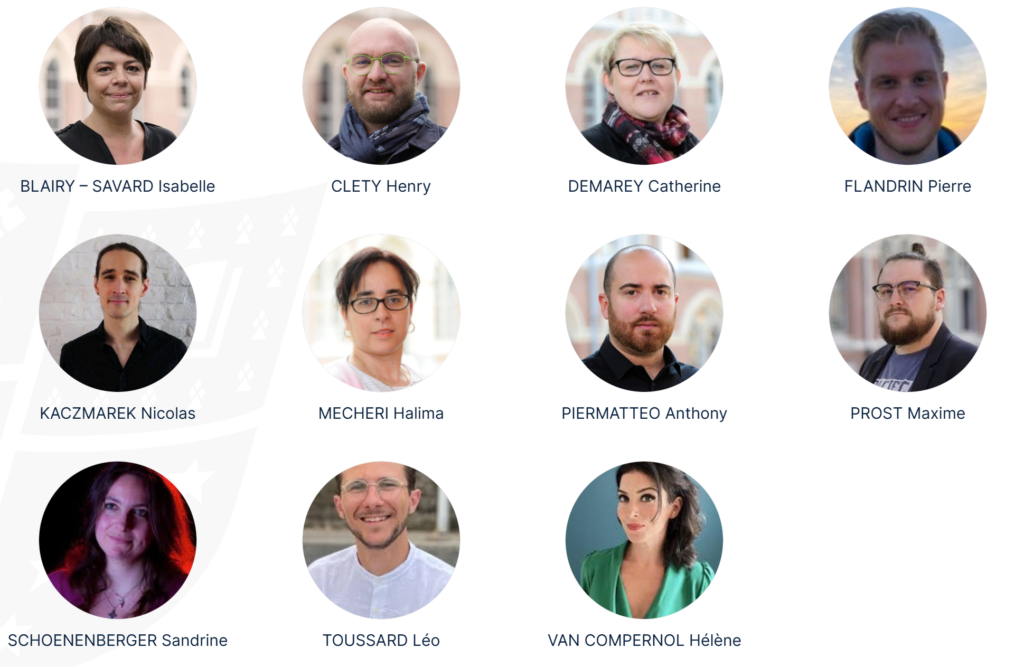
The PSyCOS (Social and Cognitive Processes in Organisations and Health) research team at the ETHICS Laboratory (EA 7446) comprises 11 lecturers and researchers, research engineers and PhD students specialising in social psychology and occupational psychology. The research carried out within PSyCOS focuses on cognitive processes and individual, collective and intergroup dynamics, in relation to health and quality of life at work, as well as physical and mental health in everyday life.
The Neurethic-Lab team
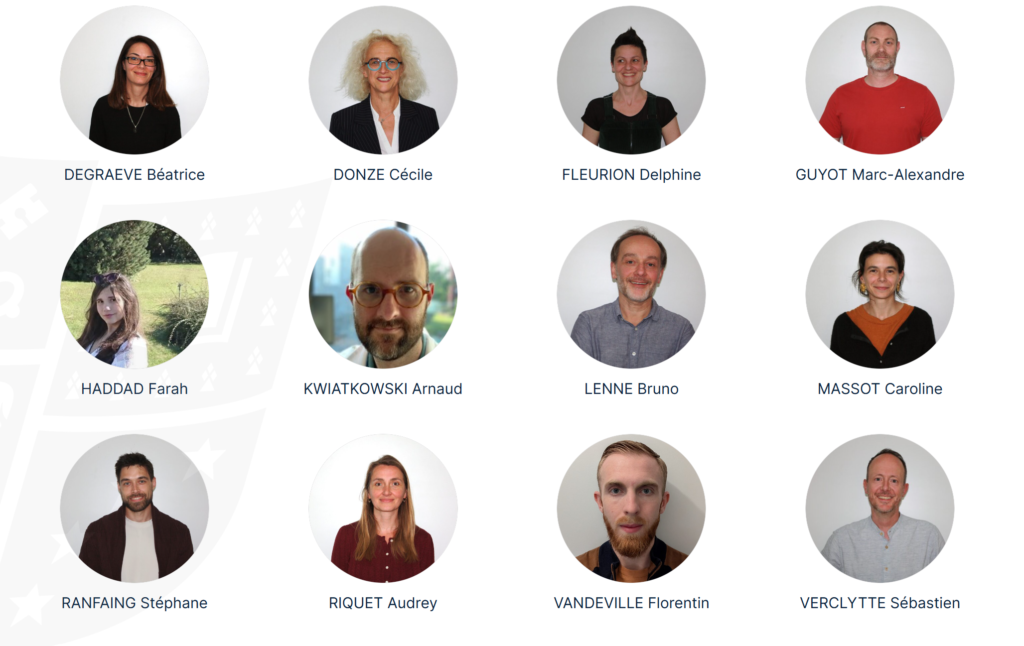
The Neurethic-Lab is an interdisciplinary research unit within the ETHICS Laboratory (EA 7446) dedicated to neuroscience, bringing together expertise in cognition, emotions, behaviour, locomotion, rehabilitation and brain imaging in relation to neurological, neurodevelopmental and neurodegenerative disorders. Its integrative approach combines fundamental research, technological innovation and the transfer of findings into clinical practice.
The Centre for Historical Geography Resources (CRGH)
The Centre for Historical Geography Resources (CRGH)
Founded in 1924 as a ‘Geography Laboratory’ attached to the Faculty of Arts and Humanities (FLSH) at the Catholic University of Lille, the Centre for Historical Geography Resources (CRGH) has undergone a century of academic developments. Based within the University’s Hôtel académique and following a transitional period marked by the Second World War, it gained considerable prominence under the leadership of Abbés Desplanques and Desreumaux, who gradually steered its research focus towards regional geography and the study of borders. Despite the abolition of the Chair of Geography in 1984, the project continued and was formally established in 1989 under the name ‘Centre for Research in Historical Geography’, led by R. Sevrin and A. Vandermersch.

Our students involved in research
Our students involved in research
At the Faculty of Arts and Humanities, Master’s students are fully involved in the dynamics of academic research. From the outset of their programme, they develop their academic skills through the writing of their Master’s dissertation and methodological training specifically geared towards research.
Beyond this academic work, they are also encouraged to get involved in collaborative projects and to play an active part in academic life:
- Creating popularised scientific content tailored to higher education (serious games, podcasts, documentaries, etc.)
- Organising and coordinating scientific events
- Taking part in study days, masterclasses and seminars
- Promoting research dissertations through editing and online publication
- Taking part in the think tank’s round-table discussions and producing policy briefs
- Publications and presentations at national and international scientific conferences
- Research-creation projects
These experiences offer a unique opportunity to gain hands-on experience of research practices and to contribute to contemporary scientific debates. Discover here some notable projects led by Master’s students involved in research at the FLSH:
- Faustine Ferri’s experience as a student and then a PhD candidate at the FLSH!
- Exchange programme, conference: Romane’s experience in the United States!
- Students have written “International Compass” and four summary reports on the think tank’s round-table discussion
- “China: Asian Hegemon?”, a book co-authored by a researcher and an alumnus!

