
Master’s Degree International relations and contemporary History
Master’s Degree International relations and contemporary History
Type: Master’s
Format: First-cycle
Duration: 2 years
Next start date: September 2026
Level: Bac +5 (State-recognized degree)
Language: French
Location: Lille

Degree offered in partnership with Université d’Artois
Become a global citizen and take an active role in the world!
Presentation International relations
Presentation of the Master's degree International relations and comtemporary history
This rich and varied course provides students with the knowledge and skills to deal with international problems from both a theoretical and a practical viewpoint. It aims to give a clear overview of the complex issues raised by the international political developments of the 20th century and their implications today. Students will gain a thorough knowledge of the theory of international relations and a firm grasp of the skills needed to work in the areas of international politics, development, defence, risk management and humanitarian aid. Students will undertake a research project, which may be written in English or in French, and which will be defended before a jury.
Student will specialise either in geopolitics or in security and defence issues.
Language of instruction: English and French
Academic Calendar:
Fall semester from mid-September to Christmas, Spring semester from mid-January to mid-May
350 teaching hours per year
Internships lasting 2 to 6 months
Lectures and Debates
Personalized Support
Program International relations
Program
- The United States as Seen from France
- Geopolitics of Latin America
- Geopolitical Cartography and GEOINT
- International Relations and Sustainable
- Development
Challenges and Opportunities of the “Anthropocene”: Climate Change, Biodiversity, etc. - Energy Transition and Security
- International Negotiations
- Geopolitics of Sub-Saharan Africa
- A Geopolitical and Intercultural Approach to Russia
- Contemporary Security Issues
- Analysis of Security Studies
- Strategic Intelligence
Specializations International relations
Specializations
The Master’s in History and International Relations offers four Specialization:
- Geopolitics & Future Studies Specialization
- Security & Defense Specialization
- Environment and Transitions Specialization
- Cultural Diplomacy Specialization
Geopolitics & Future Studies Specialization
Presentation
This program provides students with a strategic analysis methodology grounded in both theory and practice.
Drawing on a territorial approach and the key players in geopolitical issues, the program trains students to analyze conflicts, power struggles, and competition.
L’analyse géopolitique intègre une multiplicité d’acteurs publics et privés, légaux comme illégaux, l’ensemble des différentes aires culturelles (Afrique, Amérique latine, Asie, etc.) ainsi que concepts (frontières, représentations, etc.) et moyens (économiques, ressources, politiques, foncier, etc.).
Le parcours forme ainsi les étudiants à devenir analystes, rédacteurs, fonctionnaires, consultants, acteurs de l’humanitaire, etc.
Master's Program, Year 1, Semester 1
Core curriculum
Course Title: Introduction to Contemporary Southeast Asia
Number of hours: 18h
Course Title: Geopolitics of the Poles
Number of hours: 12h
Course Title: Perspectives on Asia
Number of hours: 12h
Course Title: Geopolitics of the Middle East
Number of hours: 24h
Course Title: Strategic Intelligence (english)
Number of hours: 24h
Course Title: Geopolitics of the South Pacific
Number of hours: 12h
Course Title: Current Political Events in Romania
Number of hours: 6h
Specific to the specialization
Course Title: Geopolitics of Central Asia
Number of hours: 24h
Course Title: Geopolitical Cartography
Number of hours: 15h
Course Title: Epistemology and Geopolitical Concepts
Number of hours: 18h
Course Title: Neo-Confucianism and Contemporary Thought in China
Number of hours: 12h
Master's Program, Year 1, Semester 2
Core curriculum
Course Title: Comparative Geopolitics of India and China
Number of hours: 24h
Course Title: U.S. Foreign Policy
Number of hours: 18h
Course Title: Geopolitics of the Oceans and Naval Issues
Number of hours: 12h
Course Title: Contemporary Demographic Issues
Number of hours: 24h
Course Title: Geopolitics of Energy
Number of hours: 12h
Course Title: Geopolitics of Brazil
Number of hours: 12h
Course Title: Geopolitics of Sub-Saharan Africa
Number of hours: 24h
Specific to the specialization
Course Title: Geopolitical Tools and Practices
Number of hours: 18h
Course Title: An Intercultural Approach to Russia
Number of hours: 12h
Course Title: Geopolitical Cartography
Number of hours: 20h
Master's Program, Year 2, Semester 3
Core curriculum
Course Title: French Foreign Policy Since 1945
Number of hours: 12h
Course Title: The Contemporary Mediterranean
Number of hours: 18h
Course Title: Culture and International Relations
Number of hours: 24h
Course Title: Cyberespace (english)
Number of hours: 12h
Course Title: Law of Armed Conflict and Disarmament
Number of hours: 12h
Course Title: Public Diplomacy
Number of hours: 18h
Specific to the specialization
Course Title: Africa in the World—The World in Africa
Number of hours: 24h
Course Title: Chinese soft power (english)
Number of hours: 12h
Course Title: Current Issues in the Middle East
Number of hours: 24h
Course Title: International Institutions and Humanitarian Affairs
Number of hours: 12h
Master's Program, Year 2, Semester 4
Core curriculum
Course Title: International Negotiations
Number of hours: 18h
Course Title: International Economics
Number of hours: 18h
Course Title: Geopolitics of Turkey
Number of hours: 24h
Course Title: Geopolitics of Decolonial Thought
Number of hours: 12h
Course Title: Geopolitics of Agriculture
Number of hours: 24h
Specific to the specialization
Course Title: Manga and Soft Power in Japan
Number of hours: 12h
Course Title: Geoint
Number of hours: 24h
Security & Defense Specialization
Military security is one of the key focuses of this program, but it also covers economic security—expertise sought by large companies looking to expand into new regions, for example—as well as political security, environmental security, societal security (health challenges, inclusion, etc.), and even cultural security.
Master's Program, Year 1, Semester 1
Core curriculum
Intitulé du cours : Introduction à l’Asie du Sud-est contemporaine
Number of hours: 18h
Intitulé du cours : Géopolitique des pôles
Number of hours: 12h
Intitulé du cours : Regards sur l’Asie
Number of hours: 12h
Intitulé du cours : Géopolitique du Moyen-Orient
Number of hours: 24h
Intitulé du cours : Strategic Intelligence (anglais)
Number of hours: 24h
Intitulé du cours : Géopolitique du Pacifique Sud
Number of hours: 12h
Intitulé du cours : Actualité politique en Roumanie
Number of hours: 6h
Specific to the specialization
Intitulé du cours : Enjeux stratégiques et sécuritaires au Moyen-Orient
Number of hours: 12h
Intitulé du cours : Peacekeeping, peacebuilding (anglais)
Number of hours: 24h
Intitulé du cours : Introduction to defense and security studies
Number of hours: 12h
Intitulé du cours : Enjeux mémoriels post-génocide
Number of hours: 12h
Master's Program, Year 1, Semester 21
Core curriculum
Intitulé du cours : Géopolitique comparée de l’Inde et de la Chine
Number of hours: 24h
Intitulé du cours : Politique étrangère américaine
Number of hours: 18h
Intitulé du cours : Géopolitique des océans et enjeux navals
Number of hours: 12h
Intitulé du cours : Enjeux démographiques contemporains
Number of hours: 24h
Intitulé du cours : Géopolitique de l’énergie
Number of hours: 12h
Intitulé du cours : Géopolitiques du Brésil
Number of hours: 12h
Intitulé du cours : Géopolitique de l’Afrique subsaharienne
Number of hours: 24h
Specific to the specialization
Intitulé du cours : Principes des relations internationales
Number of hours: 24h
Intitulé du cours : Les mouvements altermondialistes
Number of hours: 18h
Intitulé du cours : Géopolitique de l’Italie à la Renaissance
Number of hours: 24h
Master's Program, Year 2, Semester 3
Core curriculum
Intitulé du cours : Politique étrangère de la France depuis 1945
Number of hours: 12h
Intitulé du cours : La Méditerranée contemporaine
Number of hours: 18h
Intitulé du cours : Culture et relations internationales
Number of hours: 24h
Intitulé du cours : Cyberespace (anglais)
Number of hours: 12h
Intitulé du cours : Droit des conflits armés et désarmement
Number of hours: 12h
Intitulé du cours : Diplomatie publique
Number of hours: 18h
Specific to the specialization
Intitulé du cours : Etudes des théories de la sécurité
Number of hours: 24h
Intitulé du cours : Base industrielle et technologique de défense
Number of hours: 12h
Intitulé du cours : Les institutions européennes de la défense
Number of hours: 12h
Intitulé du cours : Les institutions françaises de la défense
Number of hours: 12h
Master's Program, Year 2, Semester 4
Core curriculum
Intitulé du cours : Négociations internationales
Number of hours: 18h
Intitulé du cours : Economie internationale
Number of hours: 18h
Intitulé du cours : Géopolitique de la Turquie
Number of hours: 24h
Intitulé du cours : Géopolitique de la pensée décoloniale
Number of hours: 12h
Intitulé du cours : Géopolitique de l’agriculture
Number of hours: 24h
Specific to the specialization
Intitulé du cours : Enjeux politiques en Asie centrale
Number of hours: 18h
Intitulé du cours : Enjeux climatiques et environnementaux contemporains
Number of hours: 12h
Intitulé du cours : Environnement et sécurité (anglais)
Number of hours: 12h
Environment and Transitions Specialization
This program focuses on the major environmental challenges of the 21st century: the degradation of “natural” environments and biodiversity, natural resource management, climate change and associated migration, rising average sea levels, the prevention and management of “natural,” health, and food-related risks, and the sustainability of the energy mix. The wide range of scales involved explains the interdependence of a growing number of stakeholders: citizens, local and regional authorities, governments, regional organizations, and international organizations are all key players in environmental issues.
Master's Program, Year 1, Semester 1
Core curriculum
Course Title: Introduction to Contemporary Southeast Asia
Number of hours: 18h
Course Title: Geopolitics of the Poles
Number of hours: 12h
Course Title: Perspectives on Asia
Number of hours: 12h
Course Title: Geopolitics of the Middle East
Number of hours: 24h
Course Title Strategic Intelligence (english)
Number of hours: 24h
Course Title: Geopolitics of the South Pacific
Number of hours: 12h
Course Title: Current Political Events in Romania
Number of hours: 6h
Specific to the specialization
Course Title: Environmental Geopolitics
Number of hours: 12h
Course Title: Environmental Issues in Asia
Number of hours: 12h
Course Title: Climatology and Global Warming
Number of hours: 24h
Course Title: Future Studies and Environmental Issues
Number of hours: 12h
Course Title: Second Foreign Language (Rare Language)
Number of hours: 20h
Course Title: Research Thesis
Master's Program, Year 1, Semester 2
Core curriculum
Course Title: Comparative Geopolitics of India and China
Number of hours: 24h
Course Title: U.S. Foreign Policy
Number of hours: 18h
Course Title: Geopolitics of the Oceans and Naval Issues
Number of hours: 12h
Course Title: Contemporary Demographic Issues
Number of hours: 24h
Course Title: Geopolitics of Energy
Number of hours: 12h
Course Title: Geopolitics of Brazil
Number of hours: 12h
Course Title: Geopolitics of Sub-Saharan Africa
Number of hours: 24h
Specific to the specialization
Course Title: Environmental Theories
Number of hours: 12h
Course Title: Geopolitics of Health
Number of hours: 18h
Course Title: Economics, Innovation, and Transitions
Number of hours: 12h
Course Title: Geography of “Natural” Hazards
Number of hours: 18h
Course Title: Second Foreign Language (Rare Language)
Number of hours: 16h
Course Title: Research Thesis
Master's Program, Year 2, Semester 3
Core curriculum
Course Title: French Foreign Policy Since 1945
Number of hours: 12h
Course Title: The Contemporary Mediterranean
Number of hours: 18h
Course Title: Culture and International Relations
Number of hours: 24h
Course Title: Cyberespace (english)
Number of hours: 12h
Course Title: Law of Armed Conflict and Disarmament
Number of hours: 12h
Course Title: Public Diplomacy
Number of hours: 18h
Specific to the specialization
Course Title: Law and the Environment
Number of hours: 24h
Course Title: nternational Institutions and Humanitarian Action (english)
Number of hours: 12h
Course Title: Seas, Oceans, and the Environment
Number of hours: 12h
Course Title: Geomatics Applied to the Environment
Number of hours: 12h
Course Title: Second Foreign Language (Rare Language)
Number of hours: 12h
Course Title: Internship
Course Title: Research Methodology
Master's Program, Year 2, Semester 4
Core curriculum
Course Title: International Negotiations
Number of hours: 18h
Course Title: International Economics
Number of hours: 18h
Course Title: Geopolitics of Turkey
Number of hours: 24h
Course Title: Geopolitics of Decolonial Thought
Number of hours: 12h
Course Title: Geopolitics of Agriculture
Number of hours: 24h
Specific to the specialization
Course Title: Chinese and Japanese Environmental Policies
Number of hours: 12h
Course Title: Financing the Environmental Transition
Number of hours: 12h
Course Title: The Challenges of the Anthropocene
Number of hours: 12h
Course Title: Second Foreign Language (Rare Language)
Number of hours: 16h
Course Title: Internship
Cultural Diplomacy Specialization
Against the backdrop of increasing globalization, culture has emerged as a central issue in international relations. Beyond its role as cultural heritage, it now serves as a genuine instrument of power and soft power, deployed by states through non-coercive strategies of influence. Its promotion, protection, and enhancement are now fully integrated into diplomatic efforts.
The proliferation of power centers and the emergence of new actors have reinforced the strategic role of culture, which serves as a vehicle for influence, dialogue, and cooperation, but is also a potential source of tensions and conflicts. Because it is distinct from military, economic, political, environmental, or societal issues, culture represents a specific domain of international security requiring dedicated analytical tools.
Emerging nations and major powers have thus integrated cultural diplomacy into their strategies for global influence. UNESCO embodies this close link between culture and diplomacy by promoting cultural diversity on an international scale. This track is part of the initiative to establish a UNESCO Chair in Cultural Diplomacy, approved in 2025.
Complementary to the other tracks in the Master’s program in History / International Relations, this specialization offers—in addition to a common core curriculum—specific courses taught by academics and professionals, preparing students for careers in cultural diplomacy, international cooperation, and cultural expertise.
40
Students per class
20h
weekly classes
2
minimum number of months of mandatory internship the 1rst year
4
minimum number of months of mandatory internship the 2nd year
Key skills international relations
Key skills
This Master’s program offers a multidisciplinary education designed to provide students with the best possible understanding of international issues from both theoretical and practical perspectives.
Students are offered a wide range of courses covering fundamental topics, which provide a strong foundation in both knowledge and practical skills. The program also emphasizes the geopolitics of major regional blocs, as well as a thematic approach to contemporary issues.
The goal of the Master’s in History and International Relations is to foster intellectual independence and to teach students to conduct precise and clear analyses, develop the ability to synthesize information, and demonstrate a keen curiosity about the world. The entire program therefore emphasizes the ability to understand current events and economic and social mechanisms, and to engage in personal reflection informed by critical thinking, in order to best prepare students to succeed in the job market through their adaptability to diverse sociocultural environments.
Teachers International relations
Some of your future teachers
At the FLSH, teachers play a key role in students’ success. They are professionals and/or researchers who pass on their knowledge with passion.

Barthélémy Courmont
Profesor in Geopolitics, Head of the Master’s Programme in History – International Relations

Loïc Laroche
Dr in Contemporary History, Head of the Master’s programme in International Journalism, Investigative Journalism and History, Co-coordinator of the Bachelor’s programme in Journalism Professions

Lucas Thénard
Dr in Geography – Vice-Dean (Faculty of Arts, Culture and Communication) – Coordinator of the Environment and Transitions specialisation within the Master’s in History – International Relations
Xavier Aurégan
Dr in Geography and Geopolitics, Co-Director of the MUSE Research Unit
what's next international relations
What's next
Students who have completed the Master’s in History and International Relations can pursue a wide range of careers, depending on their specialization (their academic track). Competitive exams for public service positions (foreign affairs, defense) can be a good gateway to several interesting careers.
Some students may also decide to continue on to pursue a Ph.D.
Careers
Diplomacy
Strategic Intelligence Analyst
Country Risk Advisor, Peacekeeping, Conflict Resolution
Project Manager for cross-border and transnational companies, associations, and NGOs
Journalist
History and International Relations Teacher

speakers international relations
The Participants in the Master's Program
The curriculum for the Master’s in International Relations program brings together the perspectives of several experts. Guest professors lead courses and master classes for Master’s students and share their professional networks and expertise with them.
They contribute to the Master’s program by:
- Sébastien Abis, Director of the DEMETER Club, research associate at the Institute for International and Strategic Relations (IRIS), professor at the Catholic University of Lille and at Junia, columnist, and author, teaches courses on the geopolitics of global food security and the geopolitics and sustainable development of the oceans.
- Olivier Arifon, a senior lecturer (HDR), author, and public communication consultant, teaches courses on Communication and Public Diplomacy: Toward a Society of Influence.
- Emmanuel Lincot, professor at the Catholic Institute of Paris, sinologist, and associate researcher at the Institute for International and Strategic Relations (IRIS), teaches courses on the Geopolitics of Central Asia—International Cultural Relations and the Comparative Geopolitics of India and China.
- Frédéric Lasserre, Full Professor, Director of the Quebec Council for Geopolitical Studies, and Head of the Chair in Indo-Pacific Studies
- Bastien Vandendyck, Communications Advisor to the Secretary of State for Citizenship, Ms. Sonia Backès, contributes his expertise in the Geopolitics of the Pacific Ocean region.

Projects international relations
Life as a Master's Student
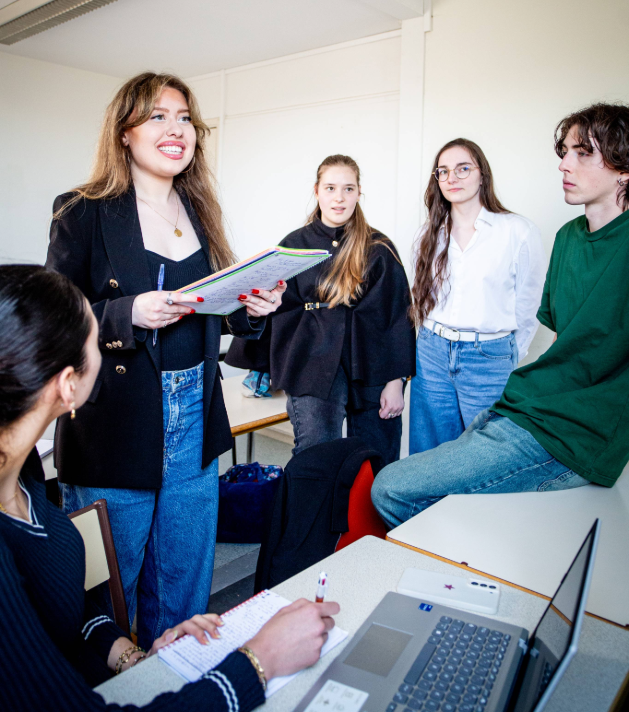
Students who have formed an association, AMRI, help drive student life and help organize numerous events:
- Master Class: Geopolitics: A Guide to Action and Local and National Politics, with Jean François Copé
- World Forum: Student participation in discussions on CSR issues with academics and business leaders.
- Launch Symposium: Research Chair in Emerging Worlds (CReME), attended by Her Excellency Ambassador Véronique Roger-Lacan, France’s Permanent Delegate to UNESCO
- Conference: France, Europe, the West: What Geopolitical Realignments in an Unstable World? with Jean-Pierre Raffarin, former Prime Minister, and Claude Leblanc, Asia correspondent for the newspaper L’Opinion
- UN Simulation
- Environmental Track – Debate on climate-related topics
- Masterclass with students from the Master’s programs in Strategic Communication and Digital Communication, in collaboration with the influencer agency AUXYMEDIA
- Participation in organizing the think tank “Great Power Rivalries and International Trade”
- Testimonial from Pierre, who earned a dual degree with Babeș-Bolyai University in Cluj-Napoca (Romania)
- Students from the AMRI association publish a newsletter, *Le coup d’œil de l’AMRI*, on LinkedIn.
Les témoignages de nos étudiants
My end-of-year dissertations and various assignments instilled in me a scientific rigour in research and writing that I still apply in my work today. Furthermore, the modules taught on the environmental programme take a more career-focused approach, which helped me enormously in making the transition into professional life. Finally, being part of the Master’s programme’s student association allowed me to gain a wealth of valuable experience (organising sporting events, taking part in podcasts, writing articles, etc.).
Victor
alumni of Master’s Degree International relations and contemporary History

Les témoignages de nos étudiants
As a Master’s student in International Relations, I felt it was essential to gain academic experience abroad. That is why, from the very first days of my first year of the Master’s programme, I took an interest in the dual-degree programme set up with the Master’s in European Studies at Babeș-Bolyai University in Cluj-Napoca. Beyond the international experience itself, studying European Studies and International Relations abroad offers greater depth and perspective on our field of study. Furthermore, Cluj-Napoca is a very international city with a vibrant student life. The lecturers at Babeș-Bolyai University are very approachable, and you find yourself part of a cosmopolitan cohort. Beyond university life, I have very fond memories of a few-day trip to Budapest with the Cluj ESN network and my road trip across the whole of Transylvania.
Pierre
student in Master’s Degree International relations and contemporary History -Dual degree in Cluj-Napoca

Les témoignages de nos étudiants
Thanks to the internship and international exchange opportunities offered by the master’s program, I was able to enrich my professional and personal journey by spending time in Austria before continuing my studies in Chile. These experiences allowed me to develop my skills, discover new cultures, and build a future focused on an international career.
Daniela
student in Master's Degree International relations and contemporary History

partenaires et institutions



Ready to join us? We’ll answer your questions !
Ready to join us? We’ll answer your questions
Staff
Administrative contact
Fatiha NAJI
Program director
Environment and Transitions :
Lucas THENARD
Géopolitique et Prospective,
Sécurité et Défense,
Diplomatie Culturelle :
Pr Barthélémy COURMONT
Is this Master’s programme offered as a work-study programme?
No, but internships are required to ensure that students gain sufficient experience in the field of cultural heritage.
How much are the tuition fees?
Fees are on a sliding scale based on income. For work-study programmes, the costs may be covered by the company’s OPCO.
Am I eligible for CROUS grants?
Yes. CROUS grant holders benefit from a reduced rate. The work-study scheme provides additional income.
What are the selection criteria for this Master’s degree?
Lorem ipsum dolor sit amet, consectetur adipiscing elit. Ut elit tellus, luctus nec ullamcorper mattis, pulvinar dapibus leo.

